
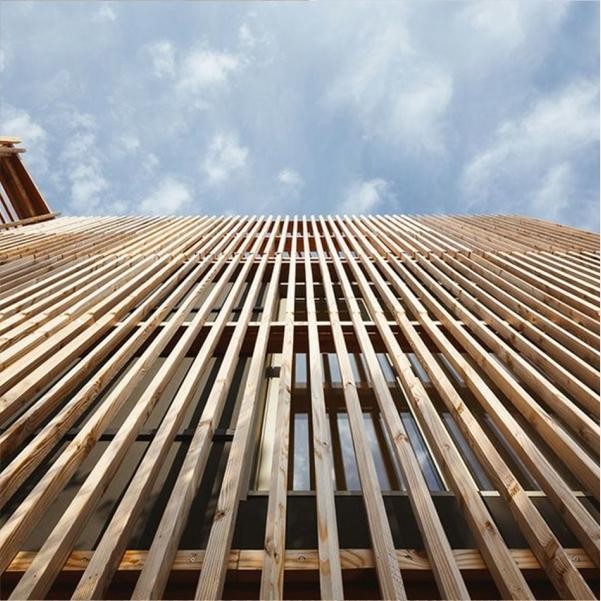

In contemporary architecture, facade design extends beyond aesthetics—it plays a critical role in building performance, sustainability, occupant comfort, and long-term value. Among the various facade elements available today, louvers have become an essential architectural feature, offering solar shading, privacy, ventilation, and visual appeal.
When selecting a louver system, architects and developers are often faced with a key decision: Should the project incorporate timber louvers or aluminium louvers?
Both materials offer distinct advantages, but the most suitable choice depends on the project’s design intent, environmental objectives, maintenance considerations, and desired architectural expression.
This article explores the differences between timber and aluminium louvers to help architects, designers, and developers make an informed specification decision.
Understanding Architectural Louvers
Louvers are fixed or adjustable horizontal and vertical slats integrated into a building facade to regulate sunlight, improve airflow, enhance privacy, and contribute to the overall architectural language of a project.
Today, louver systems are commonly specified across:
- Luxury residential developments
- Commercial office buildings
- Hospitality and resort projects
- Educational institutions
- Healthcare facilities
- Mixed-use developments
Beyond their functional role, louvers have evolved into a defining design feature, helping architects create facades that are both visually compelling and environmentally responsive.
Timber Louvers: Natural Character with Architectural Performance
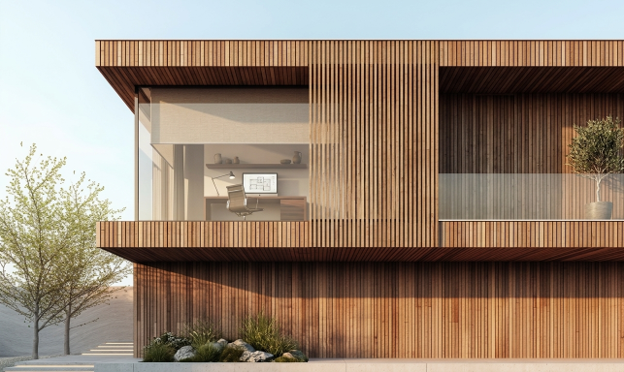
Timber has been used in architecture for centuries, valued for its warmth, authenticity, and timeless appeal. In modern facade design, timber louvers offer a sophisticated solution that balances aesthetics with performance.
1. Distinctive Natural Aesthetics
One of timber’s greatest strengths is its ability to introduce warmth, texture, and character to a building facade.
Unlike manufactured materials, every piece of timber possesses a unique grain pattern and natural variation, creating facades with depth and visual richness. This organic quality makes timber particularly attractive for architects seeking to create inviting and human-centric environments.
As biophilic design principles continue to gain prominence, timber remains one of the most effective materials for strengthening the connection between the built environment and nature.
2. A Sustainable Building Material
Sustainability is increasingly influencing material selection within the architectural and construction industry.
Responsibly sourced timber offers several environmental advantages:
- Renewable and naturally replenishable resource
- Lower embodied carbon compared to many conventional facade materials
- Carbon sequestration throughout its service life
- Potential contribution towards green building certifications such as LEED, IGBC, and GRIHA
For projects targeting sustainability benchmarks, timber louvers can play an important role in supporting broader environmental objectives.
3. Thermal Efficiency
Timber is a natural insulator and exhibits significantly lower thermal conductivity than metal.
As a result, timber louver systems can help reduce heat transfer through the building envelope, contributing to improved energy efficiency and occupant comfort—particularly in warm climates.
4. Design Flexibility
Timber offers exceptional versatility in facade applications.
Architects can customise:
- Louver dimensions
- Profiles and sections
- Spacing configurations
- Surface textures
- Colours and finishes
This flexibility allows designers to achieve a highly tailored facade solution aligned with the architectural vision of the project.
Aluminium Louvers: Lightweight and Functional
Aluminium remains a popular facade material, particularly in large-scale commercial and institutional developments where uniformity and low maintenance are key considerations
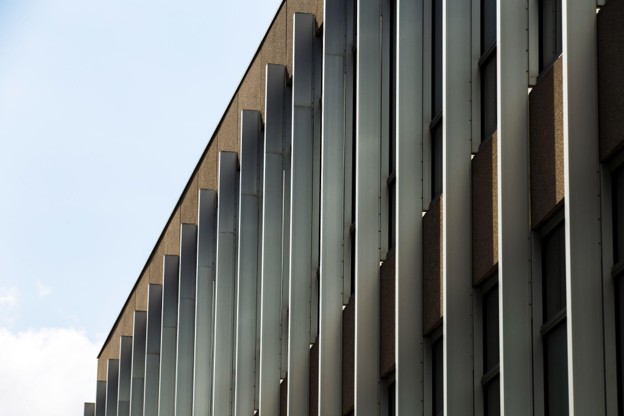
1. Durability and Corrosion Resistance
Modern powder-coated aluminium systems offer good resistance to corrosion and environmental exposure, making them suitable for a wide range of applications.
2. Structural Efficiency
Aluminium offers an excellent strength-to-weight ratio, enabling the creation of large louver systems without imposing significant additional loads on the building structure. This characteristic can simplify engineering considerations and facilitate efficient installation across a wide range of facade applications.
3. Consistency in Appearance
Manufactured aluminium profiles provide a uniform appearance across extensive facade surfaces, which can be desirable in certain architectural styles.
4. Reduced Maintenance Requirements
Unlike natural timber, aluminium does not require periodic refinishing, making it an attractive option for projects where minimal maintenance is a priority.
Timber vs Aluminium Louvers: A Comparative Assessment
Architectural Aesthetics
Advantage: Timber
While aluminium can achieve a clean and contemporary appearance, timber offers a level of warmth, depth, and authenticity that is difficult to replicate.
For luxury residences, hospitality projects, and premium commercial developments, timber often delivers a more refined and enduring architectural expression.
Sustainability
Advantage: Timber
Timber is one of the few structural and facade materials that is both renewable and capable of storing carbon throughout its lifecycle.
For architects prioritising environmentally responsible design, timber presents a clear advantage.
Thermal Performance
Advantage: Timber
The natural insulating properties of timber help minimise heat transfer, whereas aluminium readily conducts heat.
This characteristic can contribute positively to building energy performance and occupant comfort.
Maintenance
Advantage: Aluminium
Aluminium generally requires less routine maintenance than timber.
However, advances in exterior wood coatings and timber protection systems have significantly improved the durability and maintenance cycles of modern timber facades.
Architectural Character
Advantage: Timber
Timber introduces a natural and sophisticated architectural quality that aligns seamlessly with contemporary design trends, including biophilic and sustainable architecture.
Why Architects Are Increasingly Specifying Timber Louvers
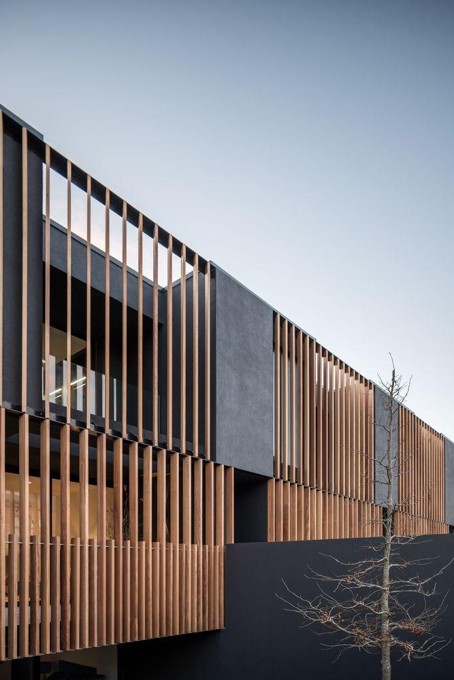
Across the global architectural community, there is a growing shift towards natural and sustainable materials.
Several factors are driving the increasing adoption of timber facade systems:
- Growing emphasis on sustainability and low-carbon construction
- Rising demand for biophilic design
- Desire for distinctive and premium facade aesthetics
- Improved performance of thermally modified timber products
- Greater awareness of lifecycle environmental impacts
As a result, timber louvers are becoming a preferred specification choice for projects seeking to balance performance, sustainability, and architectural excellence.
Applications Where Timber Louvers Excel
Timber louver systems are particularly well-suited to:
- Luxury villas and residential developments
- Hospitality and resort projects
- Commercial office buildings
- Educational campuses
- Clubhouses and recreational facilities
- Cultural and institutional buildings
When integrated alongside timber cladding, decking, and other natural facade materials, timber louvers contribute to a cohesive and sophisticated architectural language.
Selecting the Right Timber Species
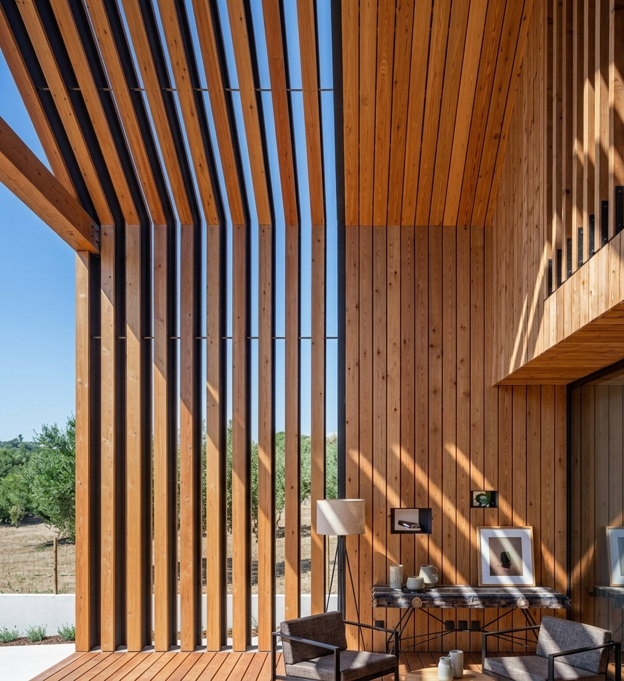
The long-term performance of timber louvers depends significantly on the species and treatment selected.
Key considerations include:
- Durability
- Dimensional stability
- Resistance to weathering
- Maintenance requirements
- Sustainability credentials
High-performance hardwoods and thermally modified timber products are increasingly specified for exterior facade applications due to their enhanced stability, durability, and longevity.
Conclusion
Both timber and aluminium louvers have their place in modern architecture, and the appropriate choice ultimately depends on project priorities.
Where low maintenance and uniformity are the primary requirements, aluminium can be an effective solution. However, for projects seeking superior aesthetics, sustainability, thermal performance, and architectural character, timber remains a compelling choice.
As architecture continues to move towards more sustainable and human-centred design approaches, timber louvers offer an opportunity to create facades that are not only visually striking but also environmentally responsible and enduring in their appeal.
By carefully selecting the appropriate timber species, finishing system, and facade detailing, architects can achieve louver solutions that deliver both performance and timeless architectural value.
Explore Timber Facade Solutions with BeautexWood
BeautexWood partners with architects, designers, and developers to deliver premium timber facade solutions, including cladding, louver systems, decking, and sustainable exterior wood products.
Our expertise in architectural timber enables us to support projects from concept through execution, ensuring every facade achieves the highest standards of performance, durability, and design excellence.
Designing a facade project? Speak to our timber specialists and discover premium louver and cladding solutions for modern architecture